
Subcision is a common dermatological surgical procedure that primarily separates the skin from the underlying tissue to improve scar healing and smooth out the rough appearance of the skin. Through precise operation, doctors can effectively promote the repair and reconstruction of scar tissue, making it especially useful for treating acne scars. With the continuous advancement of medical technology, the application range and treatment effectiveness of subcision are constantly improving, providing patients with safer and more effective treatment options.
The subcision mechanism involves using a special needle to penetrate from the skin surface deep into the base of the scar. Through a fan-shaped multiple puncture technique, it cuts and releases the fibrous tissue that is pulling the epidermis downward. This allows the sunken epidermal tissue to gradually return to its normal position, freeing it from downward traction. Subsequently, through the body’s self-repair and the generation of new collagen, further improvement of the depression occurs.
Building on this foundation, Yan’s Group has adopted an improved composite subcision technique to address scars in a more comprehensive and precise manner. This technique cleverly combines two methods: first, using a blunt cannula separation technique that employs fan-shaped multiple punctures to broadly release scar tissue at various depths that is pulling the epidermis, thereby alleviating its downward traction. Then, a needle technique is used for more precise cutting and separation of finer or stubborn fibrous tissue within the scar. This composite operation aims to achieve a more thorough scar release effect.
This composite approach significantly reduces subcutaneous bleeding while layer-cutting and thoroughly separating the scar tissue pulling at the epidermis, not only greatly shortening the recovery time and minimizing postoperative bruising, but also maintaining excellent treatment results.
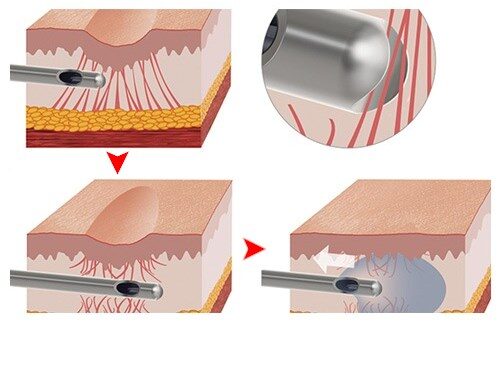
Subcision is a minimally invasive skin surgery that does not require incisions or sutures. After the procedure, only a few tiny needle holes will remain, which will gradually disappear on their own. The surgery is usually performed under local anesthesia, and aside from a slight sting when the anesthetic is injected, there is almost no discomfort throughout the entire process. This treatment can be completed at a daytime treatment center.
Compared to traditional laser treatments that use heat to destroy scar tissue and stimulate collagen production, the advantage of subcision is that it typically shows results without the need for multiple treatments and does not cause skin sensitivity or thinning.
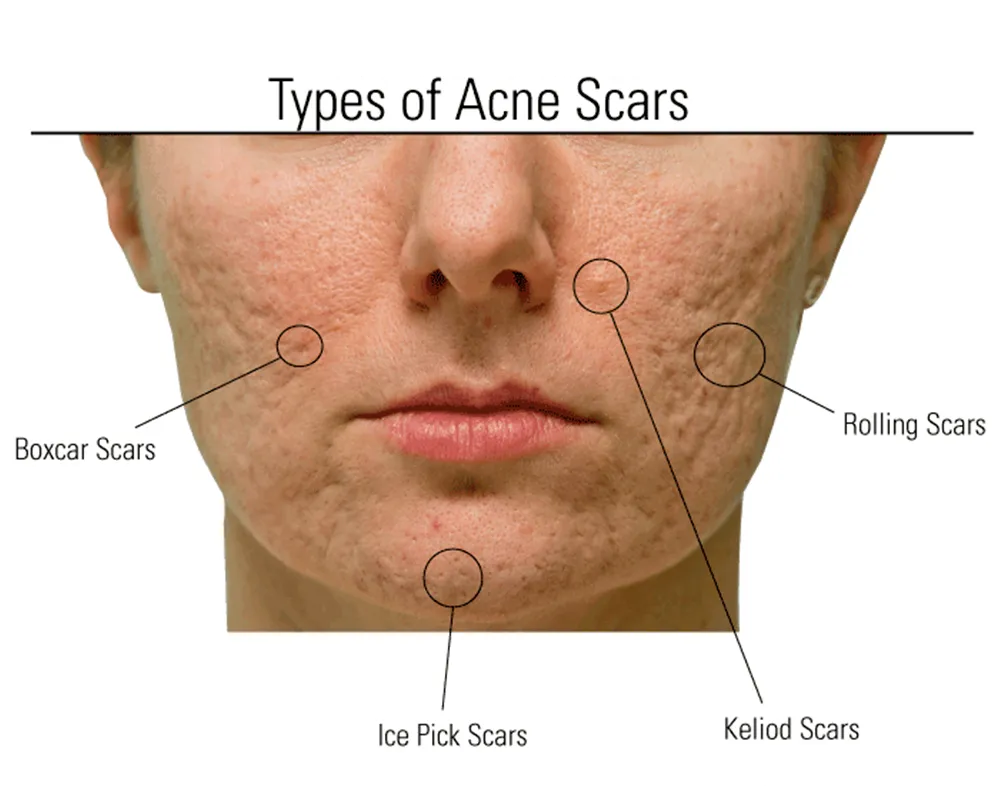
Subcision can be used in conjunction with other scar treatment methods during the therapeutic process to achieve a synergistic effect and ensure lasting results. Compared to traditional standalone subcision, this combination therapy allows for more precise reshaping of scar tissue while significantly enhancing collagen synthesis efficiency.
Most scars, especially acne scars on the face, are not of a single form but rather are a mixture of various types, such as ice pick scars, rolling scars, and even hypertrophic scars. Therefore, a single treatment approach often struggles to achieve ideal results, prompting us to adopt a combination of multiple treatment modalities. By synergistically applying subcision with other scar treatment methods, not only can we achieve better therapeutic outcomes, but we can also maximize the effectiveness of each treatment while effectively reducing potential side effects. Subcision combined with optical device technology.
Here are common combination therapies for subcision:
During the treatment process, subcision is often used in conjunction with segmented lasers or microneedling treatments to more effectively promote collagen production. This not only establishes a good foundation for subsequent treatments, making them easier to take effect, but it also reduces the number of sessions required when using equipment alone.
The combination of filler injection techniques with subcision can effectively assist in improving atrophic and depressed scars. This not only restores the volume of atrophic and depressed scars but also prevents the scars from being pulled again, leading to further depressions.
Currently, subcision combined with filler treatments offers a variety of options to meet the specific characteristics of patients’ scars. Options include using a mixture of hyaluronic acid and micromolecular collagen stimulators to smooth the skin surface or utilizing activators, such as high-concentration platelet-rich plasma (PRP), which can repair and activate fibroblasts to achieve a brightening and shaping effect in a progressive and natural manner. For certain significantly depressed areas, autologous fat transfer can also be combined with subcision to further enhance the overall treatment effect.
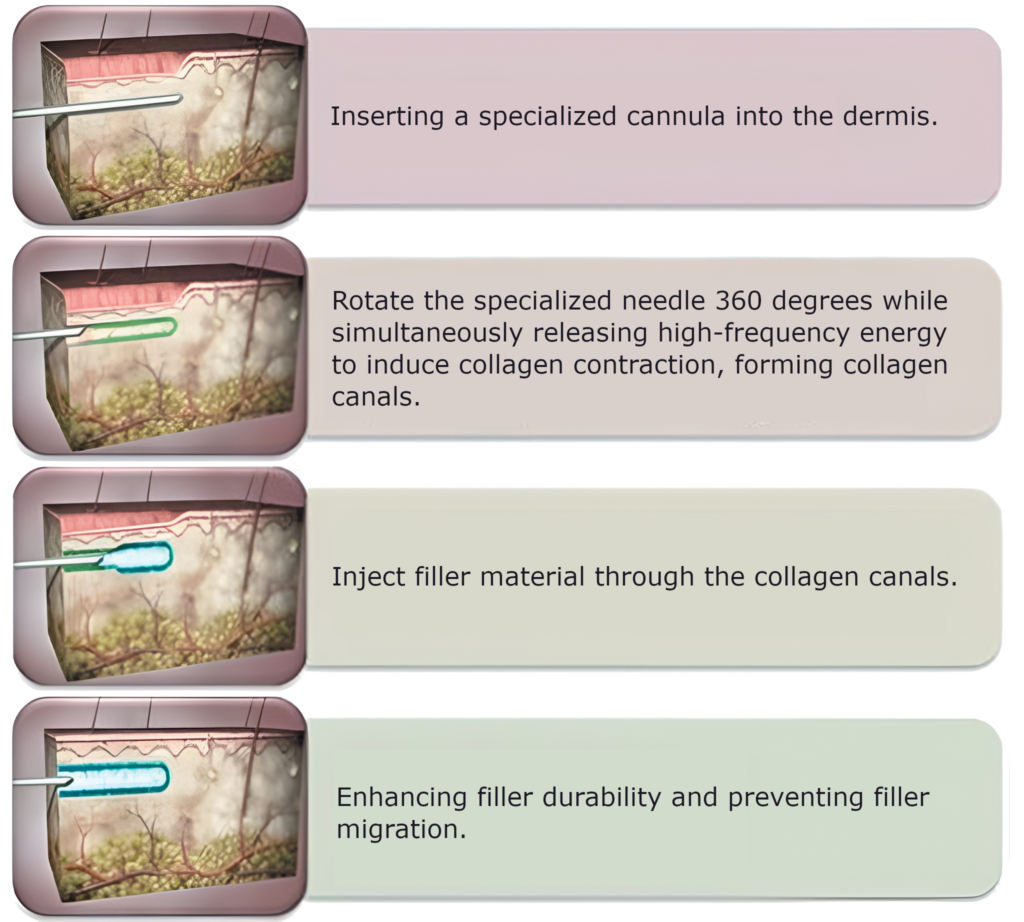
Utilizing the concept of Dermo Ablation Surgery (DAS) minimally invasive treatment, this technology integrates plasma with intradermal radiofrequency techniques. By using a catheter to penetrate the skin layers, it smooths out depressed scars while performing subcision. This innovative minimally invasive technique combines subcision with radiofrequency skin tightening functions. It can simultaneously separate and soften scar tissue, reducing the unevenness of the scars while achieving a skin-tightening effect, contributing to comprehensive facial skin remodeling.
During the treatment, the catheter penetrates deeply into the skin. Through a special injection catheter capable of emitting plasma radiofrequency energy, a 360° all-around treatment is performed deep within the skin. This not only softens scar tissue but also stimulates collagen regeneration and dermal remodeling, thereby enhancing skin texture. Additionally, this technique can be combined with filler injections to further plump and smooth out wrinkles or depressions while reducing the absorption rate of the fillers, effectively extending the results of the filler treatment.
Surgical scar revision is a cosmetic surgical procedure that directly improves the appearance of scars. In the past, dermabrasion was a popular choice for scar repair. However, due to the difficulty of postoperative care, long recovery periods, and significant side effects such as hyperpigmentation and redness, it has gradually been replaced by more refined treatment methods like surgical scar revision.
Generally, after a wound heals and forms a scar, it goes through a maturation period of about 12 to 18 months. During this time, the scar gradually stabilizes, its color lightens, and it may even become less noticeable. However, if adverse reactions occur during the scar maturation period—such as the color not fading, continued bulging or proliferation, or gradual depression and deformation—early intervention is required. In such cases, as conventional medicinal treatments have limited effectiveness on mature scars, surgical scar revision becomes an effective improvement option.
The core purpose of surgical scar revision is to enhance the aesthetic appearance of the scar and reduce its impact on the body or psyche. This procedure is a delicate technique, and the key lies in how to cleverly alter the direction of the scar and the tension of the skin while minimizing tissue damage to achieve the best repair results.
Yan’s Group’s medical team has experience in minimally invasive surgery and scar treatment. Doctors assess each scar’s characteristics, considering multiple factors such as scar color, texture, location, thickness, surrounding skin quality, and the patient’s psychological and genetic factors. A tailored repair plan is developed based on the patient’s specific scar conditions to achieve the best expected outcomes. Each individual’s scar situation is different, and the methods of repair vary accordingly. Patients considering scar removal need to have realistic psychological expectations that align with their actual circumstances to be suitable for surgery.

Copyright 2008-2025, Yan’s Group. All rights reserved. 「Disclaimer」
